
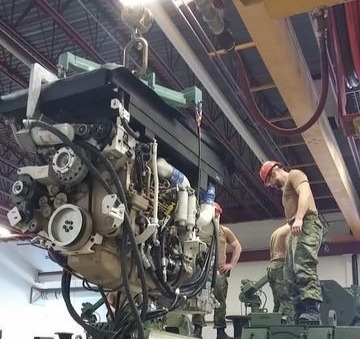
Canada has long measured defence strength by what it buys: ships, aircraft, vehicles, and advanced systems. Procurement dominates headlines, budgets, and political attention. But this focus hides a more consequential reality related to sustainment:
We don’t defend Canada with what we buy—we defend it with what we can sustain.
If a platform cannot be maintained, repaired, upgraded, and operated reliably over decades, it is not a capability. It is a liability.
As Canada moves toward significantly increased defence spending and a renewed industrial strategy, it’s time to confront a structural imbalance: sustainment has been treated as a downstream support function rather than what it truly is—a core sovereign capability.
Sustainment: The misunderstood backbone of defence
Sustainment encompasses everything required to keep military capability operational over its lifecycle:
- Maintenance and repair
- Supply chains and spare parts
- Workforce and technical expertise
- Data systems and performance analytics
- Upgrades and modernization
In practice, sustainment determines:
- Whether equipment is available when needed
- How much it costs to operate
- How long it remains relevant
Yet historically, sustainment has been treated as an afterthought—something to be addressed after acquisition decisions are made.
This is a fundamental mistake.
Buying a platform is a transaction. Sustaining it is a decades-long commitment. In many cases, sustainment costs far exceed the original purchase price. More importantly, sustainment determines whether the Canadian Armed Forces (CAF) can generate real operational readiness.
Sovereignty isn’t ownership—it’s control
Canada often equates sovereignty with ownership: if we purchase a fleet, we assume we “have” that capability.
But sovereignty is not about ownership—it’s about control.
If Canada cannot:
- Repair critical systems without foreign support
- Access spare parts independently
- Modify or upgrade platforms without external approval
- Maintain a skilled domestic workforce
Then we do not fully control that capability.
We are dependent on others for its availability.
This is not just a theoretical concern. Over-reliance on foreign original equipment manufacturers (OEMs) for sustainment can create:
- Operational delays due to supply chain disruptions
- Increased costs driven by limited competition
- Constraints on how and when equipment can be used or modified
- Strategic vulnerability in times of crisis
In a contested and uncertain world, these risks are no longer acceptable.
The cost of getting sustainment wrong
Canada’s historical focus on acquisition over lifecycle sustainment has produced predictable outcomes:
1. Reduced readiness
Platforms exist on paper but are not consistently available for operations due to maintenance backlogs, parts shortages, or workforce gaps.
2. Escalating costs
Short-term procurement decisions often lock in long-term sustainment costs that are difficult to control or reduce.
3. Loss of domestic capability
When sustainment is outsourced, Canada loses the opportunity to build and retain critical industrial skills and infrastructure.
4. Strategic dependence
Reliance on foreign sustainment ecosystems limits Canada’s ability to act independently when it matters most.
These are not technical problems—they are structural ones. They stem from how we define and prioritize capability.
Sustainment as a strategic lever
Canada’s renewed focus on defence spending and industrial policy creates a rare opportunity to reset this approach.
Sustainment should be recognized not as a cost centre, but as a strategic lever across four dimensions:
Operational readiness
Sustainment is the primary driver of availability. A well-designed sustainment system ensures that equipment is ready when needed—not just delivered on time.
National sovereignty
Domestic sustainment capability ensures Canada can operate, maintain, and adapt its forces without external constraints.
Economic resilience
Sustainment creates long-term, high-value employment in engineering, logistics, and advanced manufacturing. Unlike one-time procurement, it generates sustained economic activity over decades.
Industrial capability
A strong sustainment ecosystem builds transferable skills and infrastructure that can support multiple fleets and future programs.
In other words, sustainment is where defence capability, sovereignty, and economic policy intersect.
Designing sustainment from the start
One of the most persistent challenges is timing. Sustainment is often considered too late—after key acquisition decisions have already been made.
This must change.
Sustainment should be designed into capability from the outset, not bolted on afterward. That means:
- Evaluating procurement options based on lifecycle sustainment models—not just upfront cost
- Ensuring domestic industry participation in sustainment from day one
- Building data architectures that enable predictive maintenance and performance optimization
- Planning workforce development alongside platform acquisition
When sustainment is integrated early, it becomes a source of advantage. When it is deferred, it becomes a source of risk.
The role of data and digital capability
Modern sustainment is no longer just about parts and people—it is increasingly about data.
Digital engineering, predictive maintenance, and integrated data systems allow organizations to:
- Anticipate failures before they occur
- Optimize maintenance schedules
- Reduce downtime and cost
- Improve decision-making across the lifecycle
For Canada, investing in digital sustainment capability is essential to maintaining control over complex, modern platforms.
This is not simply a technical upgrade—it is a shift in how capability is managed.
What needs to change
If sustainment is to be treated as a sovereign capability, both government and industry must adjust their approach.
1. Elevate sustainment in policy and procurement
Sustainment must be a primary evaluation criterion in procurement decisions—not a secondary consideration.
2. Prioritize domestic sustainment capacity
Where feasible, Canada should ensure that sustainment functions can be performed domestically, supported by Canadian industry and workforce.
3. Align industrial policy with lifecycle outcomes
Industrial benefits should focus not only on production, but on long-term sustainment capability.
4. Build partnerships, not dependencies
Engagement with global OEMs is essential—but it must be structured to build Canadian capacity, not replace it.
5. Invest in workforce and skills
Sustainment depends on people. Canada must develop and retain the technical workforce required to support complex systems over time.
A shift in mindset
The conversation around defence capability in Canada is changing. Increased spending and a renewed industrial strategy signal serious intent.
But funding alone will not solve structural challenges.
What is required is a shift in mindset:
From acquisition to lifecycle
From ownership to control
From platforms to capability
Sustainment sits at the centre of this shift.
The path forward
Canada has an opportunity to lead—not by outspending others, but by outthinking how capability is defined and delivered.
Treating sustainment as a sovereign capability is not just a policy adjustment. It is a strategic choice that will shape:
- The effectiveness of the Canadian Armed Forces
- The resilience of the national economy
- The country’s ability to act independently in a complex world
The question is not whether we can afford to invest in sustainment.
It is whether we can afford not to.
Because we don’t just buy capability—we sustain sovereignty.